

Quick Answer: Common postpartum anxiety symptoms may include excessive worry, racing thoughts, intrusive fears, repeated checking, irritability, sleep problems, restlessness, a racing heart, nausea, and shortness of breath. These symptoms are more consistent with postpartum anxiety when the worry is persistent, hard to control, and interferes with daily functioning.
Some worry is normal after having a baby, especially when everything feels new. But if your mind rarely settles, reassurance doesn’t last, or fear starts affecting sleep and daily life, it may be more than typical new-mom worry.
Next Steps
If you’re struggling with addiction, you don’t have to face it alone. At Casa Capri, we offer expert, women-centered care in a supportive and nurturing space—designed by women, for women. Our team is here to help you heal with purpose and connection.
Call our admissions team for a free, confidential chat—we’ll even check your insurance and estimate any costs upfront.
What Do Postpartum Anxiety Symptoms Feel Like?
Postpartum anxiety can feel like your mind and body are staying alert even when there is no immediate problem to solve. The worry may center on your baby’s health and safety, your ability to care for them, or a vague feeling that something bad is about to happen.
The signs of postpartum anxiety do not look the same for everyone. For some women, the worry stays mostly in the mind as racing thoughts, trouble concentrating, or a steady sense that something is wrong. For others, it settles more in the body or shows up as constant checking and reassurance-seeking. Cleveland Clinic groups these symptoms into emotional, physical, and behavioral changes that often overlap in daily life.
What Physical Symptoms Can Postpartum Anxiety Cause?
Anxiety after childbirth can affect the body as well as your thoughts. Postpartum anxiety physical symptoms may include:
- A racing or pounding heart
- Shortness of breath
- Muscle tension
- Nausea or stomach discomfort
- Loss of appetite
- Dizziness
- Restlessness
- Sweating or shaking during intense anxiety
- Trouble sleeping even when you have a chance to rest
These symptoms can feel especially confusing when you are already tired and recovering from pregnancy and childbirth. Because some of them can also have physical causes after birth, anything new, severe, or unclear is worth checking with a health care provider.
Can Intrusive Thoughts Be a Sign of Postpartum Anxiety?
Yes. Postpartum anxiety can bring unwanted thoughts or images about something bad happening to your baby, even when there is no reason to believe that danger is present.
You might suddenly picture your baby becoming seriously ill, getting hurt, or stopping breathing. What can make these thoughts especially frightening is that they often focus on the things you care about most.
An intrusive thought that scares or upsets you is not the same as wanting that thought to happen. The MGH Center for Women’s Mental Health notes that intrusive thoughts are common during the perinatal period and can be deeply distressing without being associated with harmful behavior.
Persistent intrusive thoughts can also occur with postpartum OCD. Some women may notice repeated checking, reassurance seeking, cleaning, or avoidance alongside the thoughts, but a mental health professional can help you understand what these postpartum anxiety symptoms may mean and if further evaluation is needed.
Is Repeated Checking a Sign of Postpartum Anxiety?
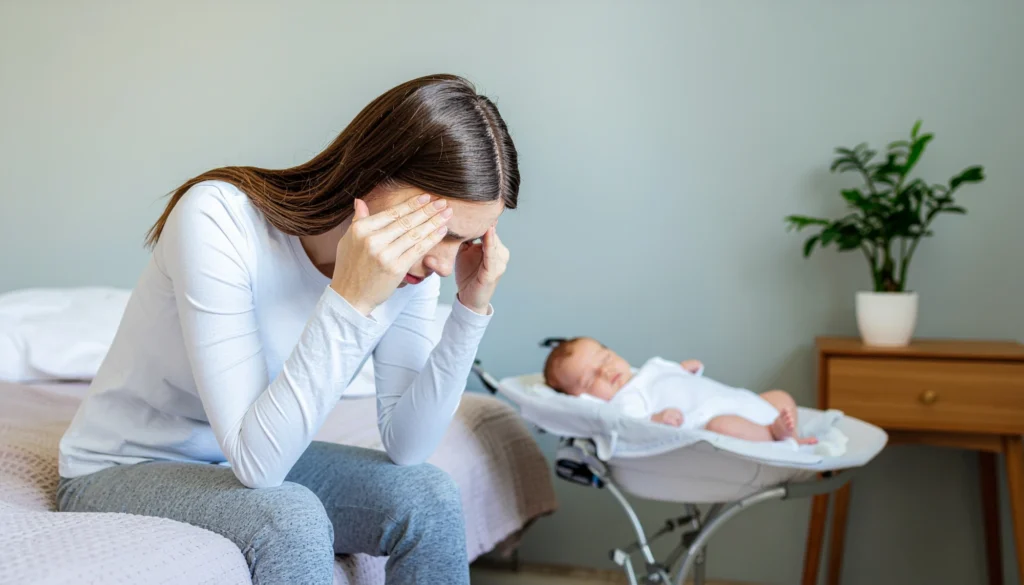
Checking can become a way to briefly calm a fear that never feels fully settled. You check whether your baby is breathing, confirm when they last ate, or ask someone for reassurance, feel better for a moment, and then the worry returns.
With anxiety, though, the urge can be hard to resist and often returns even after you know everything is okay. Repeated checking, staying on high alert, and avoiding situations that aren’t truly risky are common behavioral signs. The important question is how much worry is starting to shape your freedom, rest, or peace during the day.
How Do I Know if It’s Postpartum Anxiety or Normal Worry?
Normal worry usually responds to information and reassurance. You may be concerned about a feeding, a rash, or your baby’s sleep, but once the problem is addressed, your mind can usually move on.
Postpartum anxiety tends to linger. The worry may move from one concern to another, feel much larger than the situation calls for, or stay with you even after a doctor, partner, or family member has reassured you.
The difference usually comes down to intensity and persistence. Some worry is expected when you are caring for a newborn, but signs of postpartum anxiety can grow strong enough to interfere with everyday life and with your ability to enjoy your baby.
Being careful with your baby does not mean you have anxiety. It may be time to look more closely at what you are feeling when worry makes it hard to rest, trust yourself, leave your baby with someone safe, or move through normal parts of the day.
If that sounds familiar, you do not have to decide on your own how serious your anxiety is. Casa Capri provides anxiety and panic disorder treatment for women who need more structured support.
How Is Postpartum Anxiety Different From Postpartum Depression?
Postpartum anxiety is usually centered more heavily on fear, worry, tension, racing thoughts, or the feeling that something bad may happen. Postpartum depression tends to involve persistent sadness, hopelessness, loss of interest, guilt, or feeling emotionally disconnected.
The two often overlap. A woman may feel constantly anxious about her baby while also feeling low, exhausted, or unable to enjoy things that once mattered to her, so these experiences do not always fit neatly into one category. What matters most is giving your health care provider the full picture of what you have been feeling so they can better understand what may be going on.
Getting Support When The Worry Won’t Let Up
Anxiety deserves attention when it begins taking up much of your day, feels increasingly difficult to control, or interferes with sleep, relationships, caring for yourself, or spending time with your baby.
A primary care provider, OB/GYN, psychiatrist, or mental health professional can help you understand your symptoms and decide what level of support fits your needs.
For women who need a deeper level of care, Casa Capri offers women’s mental health residential treatment in a structured women-only setting. Current programming includes care for anxiety and panic disorders as well as depression, trauma, emotional dysregulation, eating disorders, and co-occurring substance use concerns.
When Symptoms Need Urgent Attention
Intrusive thoughts that frighten you are different from losing touch with reality. Seek immediate help if you experience postpartum anxiety symptoms such as:
- Hallucinations
- Delusions or beliefs that are not based in reality
- Severe confusion
- Paranoia
- Thoughts or intentions of harming yourself or your baby
Postpartum psychosis is a psychiatric emergency. The National Institute of Mental Health advises calling 911 or going to the nearest emergency room when symptoms of postpartum psychosis are present. If you are in a suicidal or mental health crisis in the United States, call or text 988.
You do not need to wait until anxiety has taken over every part of your life before talking to someone. If worry has become difficult to carry on your own, contact Casa Capri Recovery for a confidential conversation about what you are experiencing and how our women-centered care may fit your needs.
Next Steps
If you’re struggling with addiction, you don’t have to face it alone. At Casa Capri, we offer expert, women-centered care in a supportive and nurturing space—designed by women, for women. Our team is here to help you heal with purpose and connection.
Call our admissions team for a free, confidential chat—we’ll even check your insurance and estimate any costs upfront.
FAQs About Postpartum Anxiety Symptoms
Can postpartum anxiety cause panic attacks?
Yes. Some women experience episodes of intense fear with symptoms such as a racing heart, shortness of breath, dizziness, shaking, or feeling out of control. Panic attacks can occur alongside other postpartum anxiety symptoms.
Can you have postpartum anxiety if you never had anxiety before?
Yes. A previous history of anxiety can increase risk, but it is not required. Postpartum anxiety can begin in women who have never experienced a significant anxiety disorder before.
Can postpartum anxiety affect bonding with your baby?
It can make it harder to relax and enjoy time with your baby because so much attention is going toward watching, checking, and anticipating possible problems. That experience does not determine what your bond will look like as the anxiety improves.
Can lack of sleep make postpartum anxiety worse?
Yes. Broken sleep is hard to avoid with a newborn, and running on very little rest can make worry feel louder and harder to switch off. It can turn into a loop where anxiety keeps you from sleeping, and the exhaustion then feeds the anxiety. Protecting even short stretches of rest, with help from the people around you, can take some of the edge off.
Is postpartum anxiety the same as postpartum OCD?
Not quite. The two are related and can overlap, but postpartum OCD usually pairs intrusive thoughts with repeated actions meant to relieve them, like checking or cleaning. If unwanted thoughts and the urge to respond to them take up more of your day, a mental health professional can help you make sense of what is going on.